Zero-Width Characters Compared: ZWS vs ZWNJ vs ZWJ
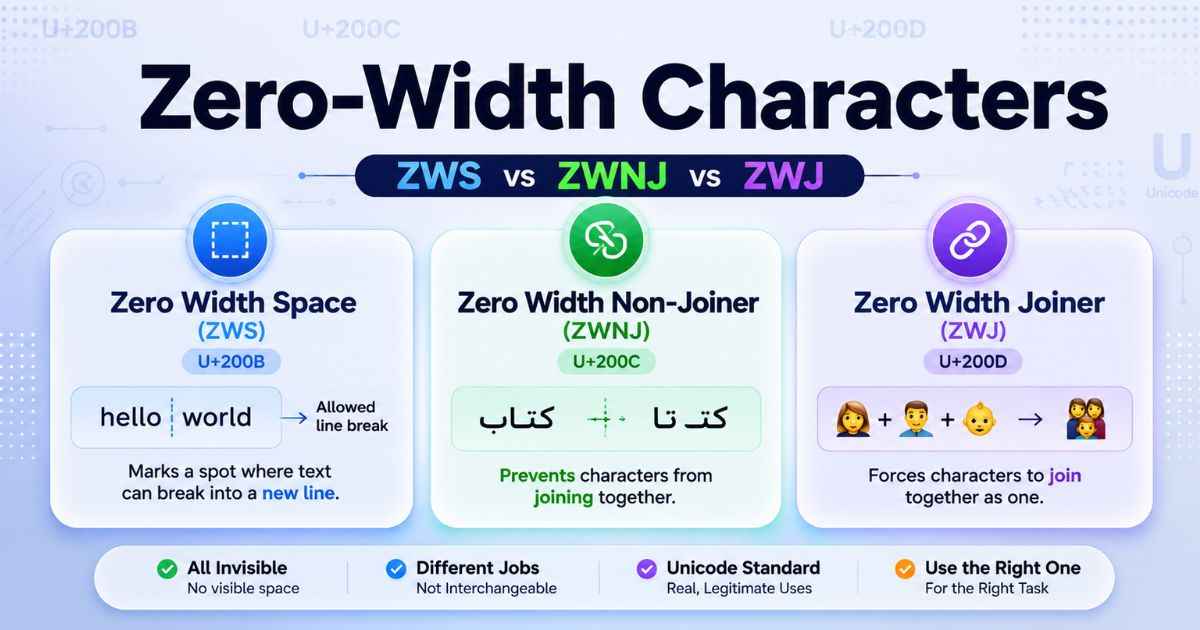
Zero-Width Characters

Zero-width characters all share one trait. They normally have no visible width. Past that, they do completely different jobs. Mixing them up is an easy mistake to make, and it can cause unexpected results if you pick the wrong one. This guide compares three common zero-width characters side by side. It focuses on what makes … Read more
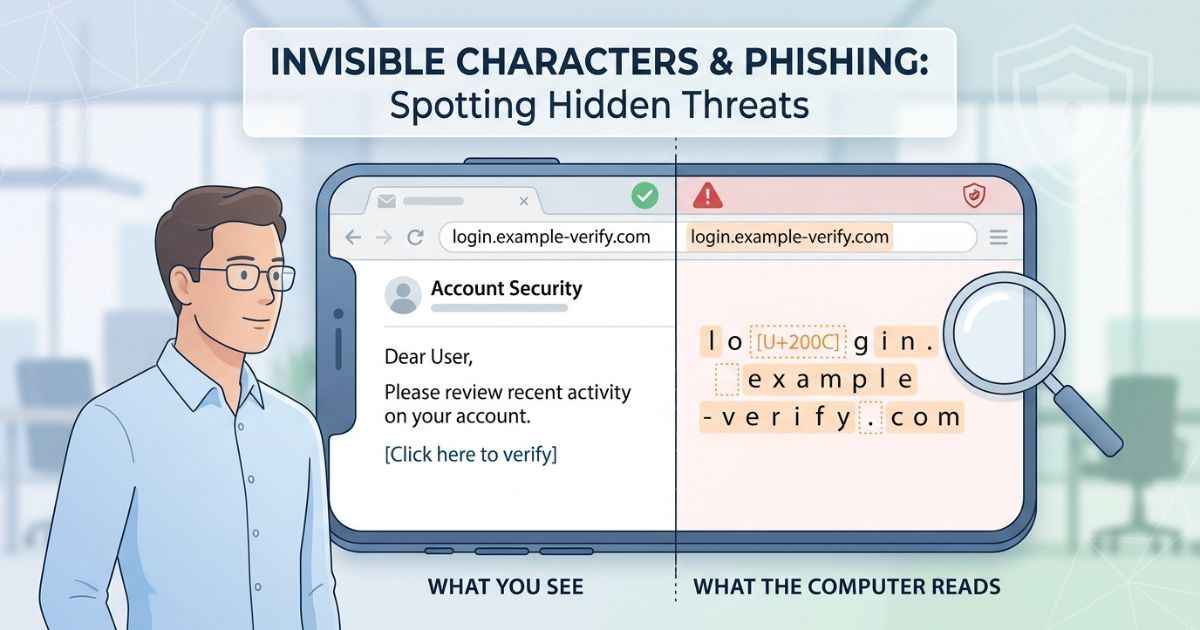
Invisible Characters and Phishing: How the Trick Works

invisible-characters-and-phishing

Invisible characters and phishing can sometimes appear together, though not in the way many people expect. A phishing attempt does not need an invisible character to work. Scammers can use hidden or unusual characters as one way to make a fake link or a fake name look more convincing than it should. This guide explains … Read more

Invisible Characters and Accessibility: What to Know

Invisible characters and accessibility

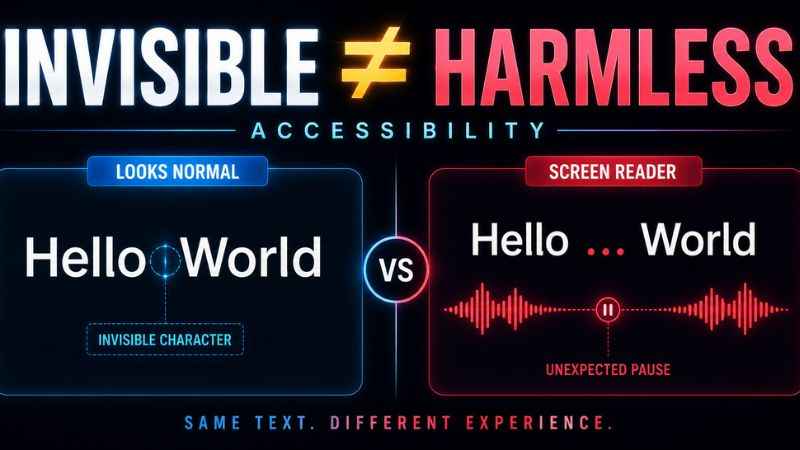
Invisible characters and accessibility do not always mix well. A character that looks empty on screen can still affect how text is processed or presented. The exact result depends on the character, browser, operating system, and assistive technology. This guide explains how assistive technology can handle these characters, who may be affected, and when using … Read more

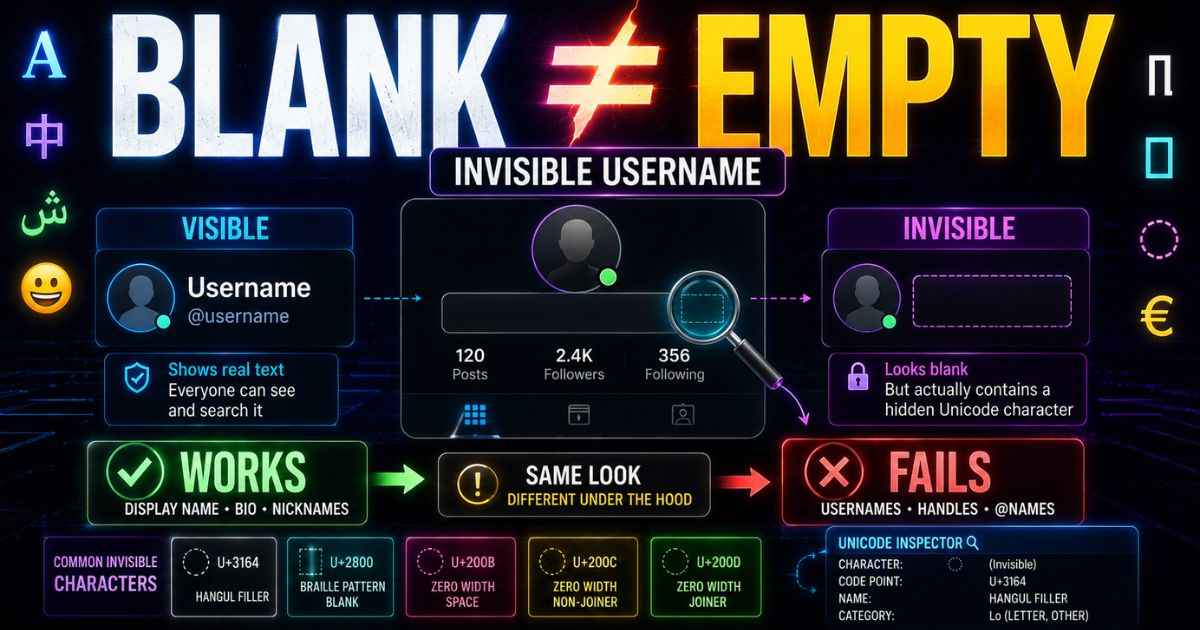
Invisible Username Guide: How Invisible Names Work

Invisible Username Guide

An invisible username is a name that looks blank but is not actually empty. People use invisible usernames on many apps, games, and websites. The effect usually comes from a Unicode character that has little or no visible appearance, rather than from an ordinary space. This guide explains how invisible usernames work in general. It … Read more

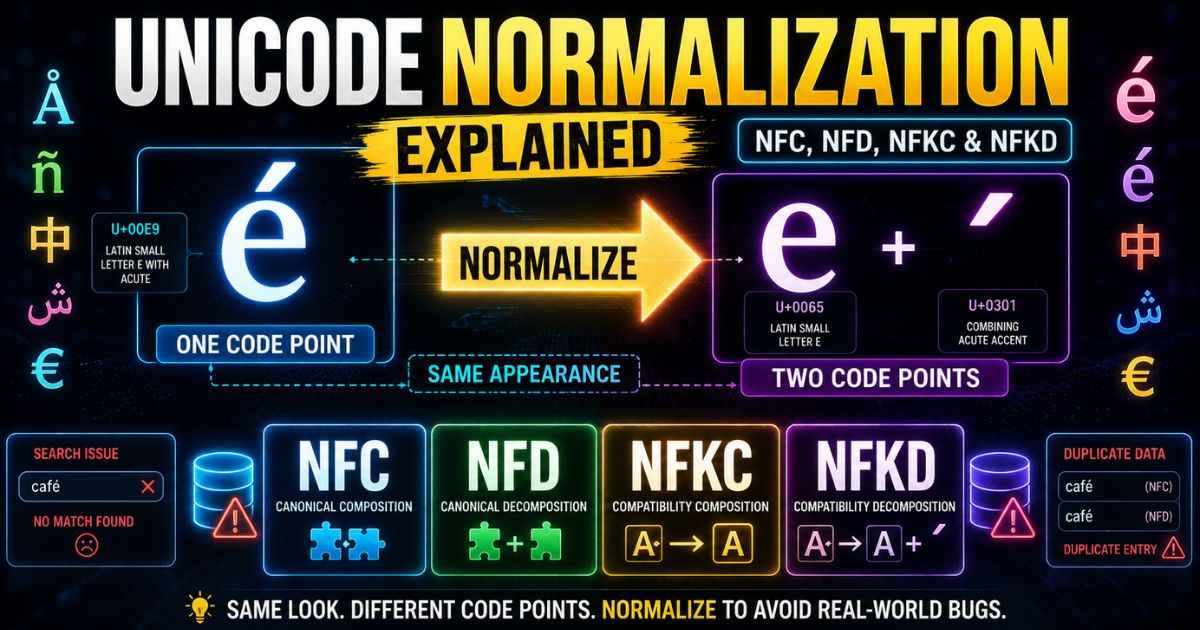
Unicode Normalization Explained: NFC, NFD, NFKC & NFKD

Unicode normalization

Unicode normalization takes different but equivalent text representations and puts them into a consistent form. It gives applications a standard way to compare text that may use different sequences of Unicode code points. Without this step, the same visible text can be stored in more than one way, which can cause problems with text comparison, … Read more

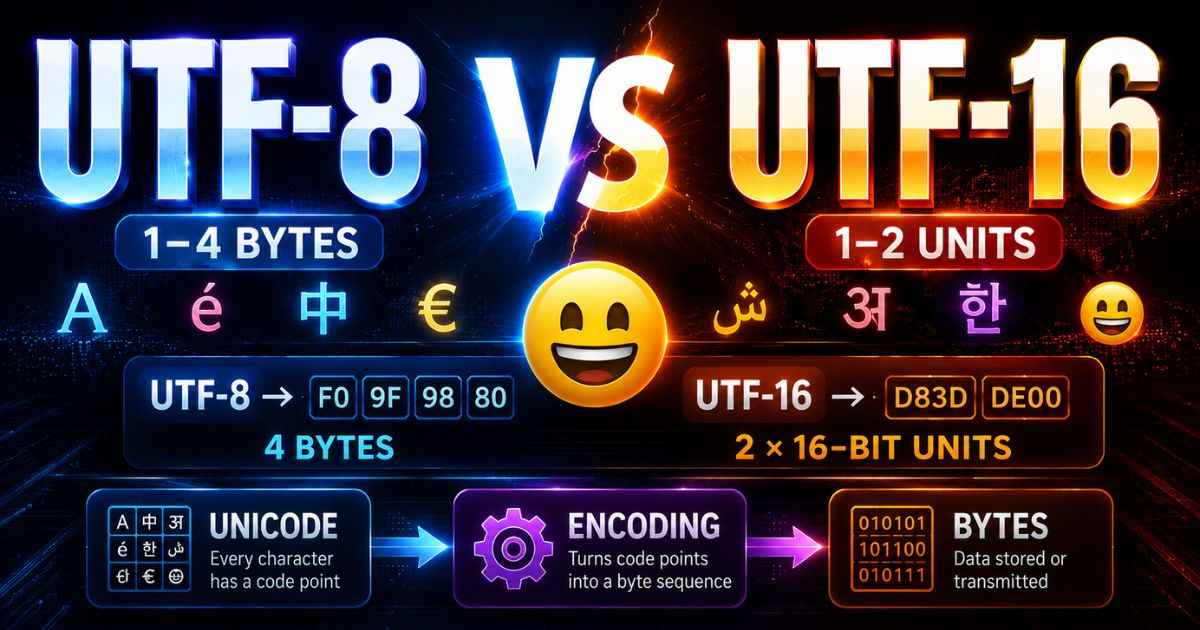
UTF-8 vs UTF-16: Key Differences, Size & Uses Explained

UTF-8 vs UTF-16

UTF-8 vs UTF-16 comes down to one simple question. How does a computer turn a Unicode number into real bytes? Both formats can represent the same Unicode characters. Unicode defines the code points. UTF-8 and UTF-16 are two different encoding forms used to represent those code points as code units. This choice can affect file … Read more

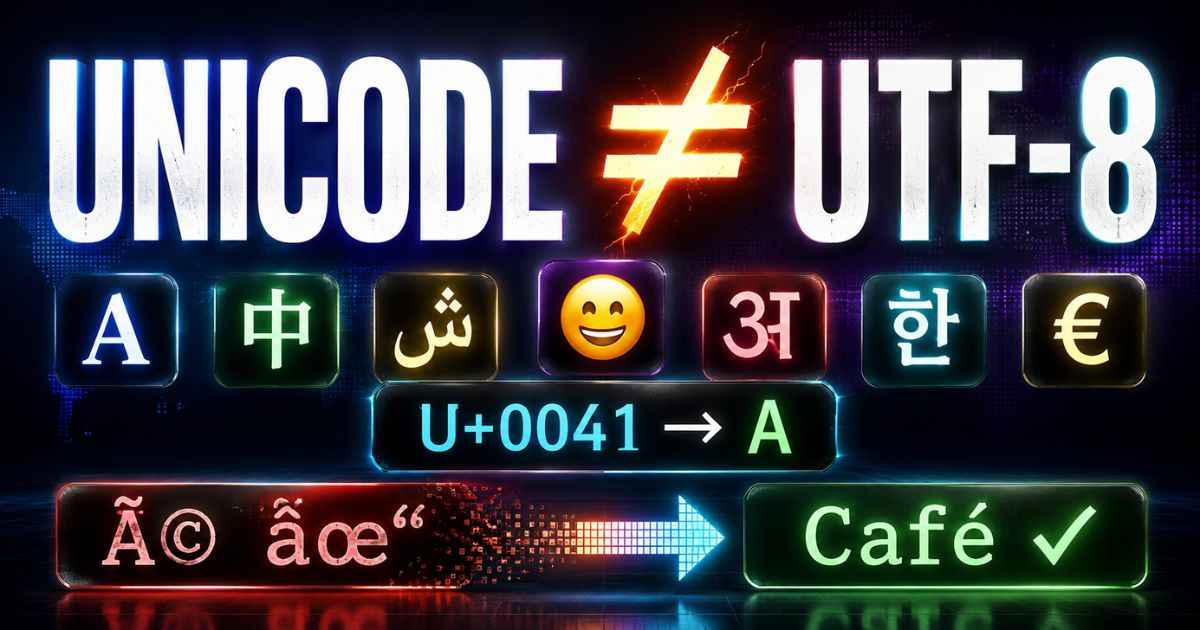
What Is Unicode? A Simple Guide to Characters, Code Points, and Encoding

What is unicode

Unicode is a system that gives characters a unique number. Computers use these numbers to represent text from many different writing systems. Before Unicode, computers often used different character encoding systems, which could cause text to appear as confusing symbols when moved between systems. This guide explains what Unicode really is. It also covers why … Read more

What Is Zero Width Space (U+200B)? Meaning and Uses

Zero width space

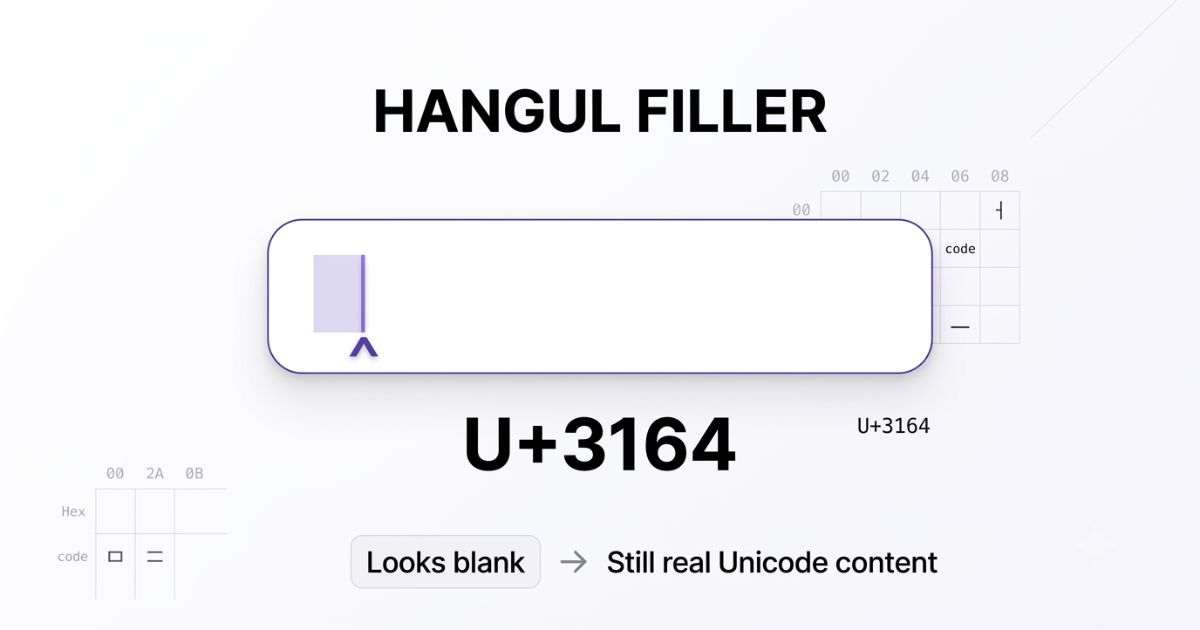
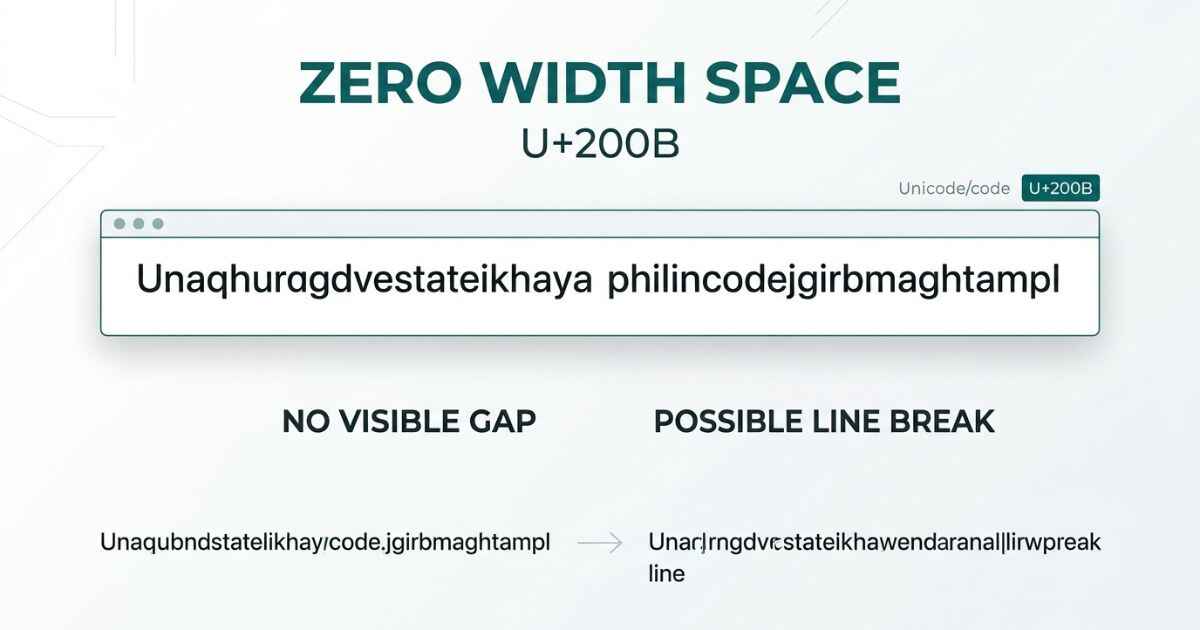
Zero width space is a Unicode character at code point U+200B. Unlike Hangul Filler, zero width space has no intrinsic width. It can sit between two visible characters without creating a visible gap. Its main purpose is to mark a possible word or line-break point in text. U+200B Zero Width Space Copy it below and … Read more